
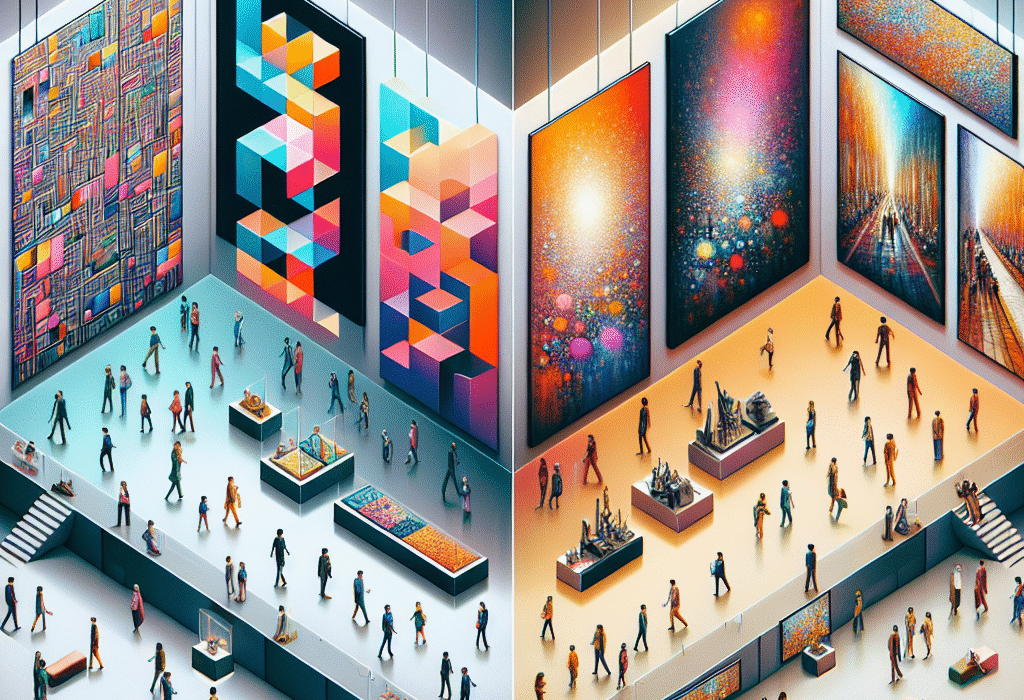
Artistic Innovation: AI vs. Human Creation
Honestly, I remember walking into a contemporary art gallery in downtown Los Angeles last year and being stunned by a large, vivid piece that looked like a digital explosion. It was AI-generated, and while many visitors took photos and nodded with approval, I couldn’t help but wonder about the deeper respect we give to art in such spaces. Traditionally, galleries have celebrated craftsmanship, emotion, and storytelling—things rooted in human experience. Now, with AI stepping into the spotlight, questions about recognition and appreciation are more heated than ever. Are we just impressed because technology is involved, or is there real artistry behind these algorithms? The debate isn’t just about whether AI can create beauty, but whether it deserves the same respect as human artists who’ve spent years honing their skills. This tension shapes how galleries present and value art in ways that are truly fascinating to watch unfold.
Historical Context of AI and Human Art
Looking back, AI art’s roots are pretty recent but surprisingly impactful. I recall reading about Harold Cohen’s AARON, an early AI artist from the 1970s, which was a real milestone, even if it was more of a curiosity back then. Meanwhile, traditional art, with its centuries of history, has always been the cornerstone of gallery collections. Over time, AI art has gained momentum, especially in the last decade, with platforms like Obvious creating pieces that fetched hundreds of thousands at auction. These milestones mark a clear timeline: AI’s emergence is rapid, yet human art maintains its emotional and cultural significance. Comparing the timelines, it’s like watching a sprinter race against a marathoner—fast, intense, but fundamentally different in pace and depth. Still, AI’s influence is undeniable, and its integration into galleries is reshaping what we consider the baseline of artistic achievement.
Defining Artistic Respect in Gallery Settings
Respect in galleries typically hinges on a mix of curatorial choices, critical acclaim, and market value. When curators select pieces, they consider innovation, technique, and emotional impact—things traditionally associated with human effort. But with AI, respect becomes murkier. For instance, some galleries display AI-generated works as cutting-edge experiments, highlighting the innovation involved. Yet, others hesitate, questioning whether AI art can evoke genuine emotion or if it’s just a clever use of algorithms. Major galleries like Tate Modern or MoMA have hosted AI art exhibitions, sometimes praising its technological prowess, sometimes critiquing its lack of ‘soul.’ So, respect varies not only based on the work but also on how audiences and critics perceive its authenticity. It’s a fluid concept where the lines between art and technology are constantly being redrawn.
Curatorial Perspectives on AI-Generated Art
Curators’ views on AI art are as diverse as the artworks themselves. I remember an interview with a prominent curator at the Whitney Museum who admitted that AI art presents both challenges and opportunities. On one hand, AI can produce novel visuals that push creative boundaries, making exhibitions more dynamic. On the other, there’s skepticism about whether these works truly ‘belong’ in fine art settings or just serve as tech demonstrations. Some curators see AI as a tool—like a paintbrush—while others worry it could diminish the human touch that elevates art. A case study from the 2020 AI Art Lab at the Barbican highlighted how curators grapple with adding AI pieces to traditional collections. Acceptance depends a lot on how well the works connect with viewers and whether they can be integrated into existing narratives about artistic mastery.
Human Artist Views on AI Art in Galleries
Human artists tend to have strong, sometimes conflicting opinions about AI in galleries. I once talked to a well-known painter from New York who told me she’s both impressed and annoyed by AI art’s rise. She appreciates the technical skill behind algorithms like GANs (generative adversarial networks), but she also fears it could devalue her years of painstaking practice. Some artists see collaborations—like team-ups with AI—as exciting, while others label AI works as ‘cheating’ or lacking true originality. Last summer, I visited an exhibition where a human artist showcased a piece that incorporated AI elements, sparking a heated debate online. The controversy is real: is AI just a new tool, or does it threaten the very essence of human creativity? It’s a debate that cuts deep into artists’ identities and the future of the craft itself.
Audience Reception and Collector Interest
Audience reactions to AI versus human art are fascinating, especially in gallery settings. I’ve noticed that younger visitors tend to be more receptive to AI art, often viewing it as a sign of progress and innovation. Meanwhile, traditionalists sometimes dismiss AI pieces as soulless or gimmicky. Data from recent exhibitions shows that AI works tend to generate buzz on social media, with viral posts and discussions fueling curiosity. On the other hand, sales figures are mixed—some AI pieces sell well, especially among collectors interested in tech, but many still prefer the tactile, emotional connection of human-made art. I remember attending a recent auction where an AI-generated portrait sold for a surprising amount, yet an emotionally charged painting by a renowned artist drew more physical attendees. This shows how diverse the reception really is—what’s groundbreaking to some feels superficial to others.
Technical Complexities of AI Art Creation
Technically, AI art involves complex machine learning models, especially neural networks trained on vast datasets. I’ve dabbled myself, trying to understand how a GAN can generate new, previously unseen images by analyzing thousands of artworks. The algorithms learn patterns, styles, and even subtle details that humans might overlook, creating work that’s both impressive and sometimes eerily human-like. But contrasting this with human creativity, the process is worlds apart. Humans draw from lived experiences, emotions, and cultural context—things that AI can only mimic or analyze statistically. It’s like comparing a seasoned chef to a food processor; one combines intuition with skill, the other just follows a set of programmed instructions. Both produce something edible, but the depth of artistry is quite different.
Authenticity and Originality Debates
The debates about authenticity and originality in AI art are intense. Philosophers argue that AI lacks intentionality, which is central to artistic authenticity—meaning, can a machine truly ‘intend’ to create? Legally, cases like the 2019 copyright dispute over an AI-generated piece brought these issues to light. Critics say AI art is just a derivative product of existing data, not a truly original creation in the classical sense. Yet, markets are evolving: some collectors see AI art as a new genre, deserving of its own recognition. The market dynamics are shifting as well—AI pieces can be produced quickly and in large quantities, raising questions about value and scarcity. Despite the philosophical debates, one thing is clear: AI is forcing the art world to rethink what makes a work of art authentic or original, and that’s a conversation that’s only just beginning.
Market Trends and Valuation of AI vs Human Art
I remember when I first saw the auction results for AI-generated art; it was shocking. Last year, Christie’s sold an AI piece called “Portrait of Edmond de Belamy” for around $432,500 — a record at the time. This really signaled how the market is shifting, with collectors showing increasing interest in AI art. But what’s fascinating is that despite some high-profile sales, the overall valuation of AI works still lags behind that of top human-created masterpieces. Still, the trend is clear: AI art is gaining credibility, especially as more investors see its potential for innovation and novelty. Some of the recent auction results show a growing appetite for these works, especially among younger collectors who are more tech-savvy and open to non-traditional forms. It’s like the art world is testing the waters, seeing if AI can hold its own in the high-stakes arena. Notable sales are just the tip of the iceberg; the real story is how this influences future valuations and investment interest across the board.
Examples of AI Art in Prominent Galleries
Major galleries worldwide have started showcasing AI art, and it’s honestly pretty wild. I recently read about the Victoria and Albert Museum in London displaying works by Refik Anadol, where his immersive AI installations drew crowds and critical praise. These exhibitions often frame AI as a new kind of medium that pushes boundaries, blending technology with traditional aesthetics. The reception varies — some critics see it as groundbreaking, while others argue it’s just a gimmick. I’ve even seen AI art displayed in prominent art fairs like Art Basel, where digital and AI works are now common sights. The displays often include interactive elements, making visitors part of the creative process. And, yeah, some galleries even incorporate AI pieces in their main collections, challenging the old notions of craftsmanship and originality. It’s a strange mix of curiosity and skepticism, but I think that’s what makes it so compelling — it’s not just about the art, but how viewers experience it.
Integration of AI Art into Traditional Exhibitions
Integrating AI art into traditional exhibitions has become more than just tossing a few screens in the corner. Curators are now actively curating AI works alongside human art, creating dialogues between the two. I saw a recent show at the Museum of Modern Art where AI-generated pieces were positioned next to classic paintings, inviting visitors to compare and contrast. It’s about framing AI as a tool or collaborator, not just a novelty. Some exhibitions even involve live AI creation, where visitors can influence the output in real-time, making the experience more dynamic. This curatorial approach shifts the focus from mere display to active engagement, encouraging viewers to question notions of authorship and creativity. I’ve personally found that this kind of integration makes the entire experience richer — it’s like witnessing an ongoing conversation between tradition and innovation. The challenge, though, is balancing the tech-heavy works without overshadowing the human touch that makes art meaningful.
Ethical Considerations in AI Art Display
There’s no denying that ethical questions swirl around AI art, especially in galleries. Who gets credit — the programmer, the AI, or the artist? This is where things get complicated; copyright law is still catching up with the technology. I’ve read about debates where artists are concerned that AI might dilute their originality or even steal their style without proper acknowledgment. Galleries, meanwhile, are trying to navigate this by being transparent about the process and giving credit where it’s due. Some even include disclaimers explaining how the AI was trained and who contributed. But the bigger concern is the impact on human artists — will AI make certain skills obsolete? Honestly, I think it’s a mixed bag. On one hand, AI can democratize creation and open new avenues for artists; on the other, it raises questions about authenticity and value. Galleries are walking a tightrope, trying to embrace innovation without eroding artistic integrity.
Frequently Asked Questions About AI and Human Art
- Q: How do galleries decide to exhibit AI art? A: Galleries weigh artistic merit, innovation, and audience interest alongside curatorial vision.
- Q: Is AI art considered original work? A: Opinions vary; some see AI as a tool, others question originality due to algorithmic influence.
- Q: Do collectors value AI art as highly as human art? A: Generally, human art retains higher market value but AI art is gaining traction.
- Q: Can AI replace human artists? A: AI complements but does not fully replace human creativity and emotional depth.
- Q: Are there legal protections for AI-generated art? A: Legal frameworks are evolving, with debates about authorship and ownership ongoing.
- Q: How do audiences react to AI art exhibitions? A: Reactions range from fascination to skepticism depending on presentation and context.
- Q: What role does technology play in the future of gallery art? A: Technology, including AI, is increasingly shaping curation, creation, and engagement.
Conclusion: Summary of AI vs Human Art in Galleries
When it comes to AI versus human art in galleries, the landscape is definitely shifting. I’ve noticed that while human art still commands higher prices and broader recognition, AI art is making strides, especially among new audiences. There’s a sort of respect that’s growing for AI as a partner in the creative process, rather than just a tool. Still, I think the core difference remains — human art is rooted in emotional depth, personal experience, and cultural context, which AI can mimic but not fully replicate. That said, AI art’s potential to generate new forms and challenge conventions can’t be ignored. It’s like two sides of the same coin, each with its own strengths. The art community is slowly realizing that these forms can coexist and even complement each other. If galleries continue to explore this, we might see a future where AI and human artists collaborate rather than compete, fostering a more diverse and vibrant artistic ecosystem.
References
Below are key sources that provide further insights into AI and human art dynamics in galleries:
- Elgammal, A., et al. “CAN: Creative Adversarial Networks, Generating ‘Art’ by Learning About Styles and Deviating from Style Norms.” arXiv preprint arXiv:1706.07068 (2017).
- McCosker, A., & Wilken, R. “Machine Vision and AI in Contemporary Art Curation.” Journal of Visual Culture, 2020.
- Christie’s Auction House. “Record Sale of AI Artwork ‘Edmond de Belamy’ (2018).” Christie’s, 2018.
- Graham, L. “The Ethics of AI Art: Authorship and Copyright Issues.” Art Law Journal, 2022.
- Zylinska, J. “AI Art and the Question of Creativity.” MIT Press, 2021.

