PostgreSQL vs MySQL: The Ultimate Showdown for Cloud-Based Databases
When it comes to PostgreSQL vs MySQL for cloud-based databases, developers are often faced with a tough choice. Both are powerful relational database management systems (RDBMS) widely used in cloud environments. Understanding their differences, advantages, and disadvantages is crucial for making an informed decision.
Introduction to PostgreSQL and MySQL
PostgreSQL and MySQL are two of the most popular open-source databases today. PostgreSQL is known for its advanced features and compliance with SQL standards, while MySQL is favored for its speed and simplicity. Choosing between them hinges on your specific needs, especially in a cloud-based setting.
Performance and Scalability
In terms of performance, both databases excel but in different scenarios. MySQL tends to perform better in read-heavy applications, making it a go-to for web applications and online transaction processing. On the other hand, PostgreSQL shines in complex queries and large data sets, which is beneficial for analytical applications.
Data Integrity and Compliance
When comparing PostgreSQL vs MySQL for cloud-based databases, data integrity is a critical factor. PostgreSQL offers advanced features like multi-version concurrency control (MVCC), which allows for high levels of data integrity and consistency. MySQL, while reliable, may require additional configuration for strict data integrity.
Community and Support
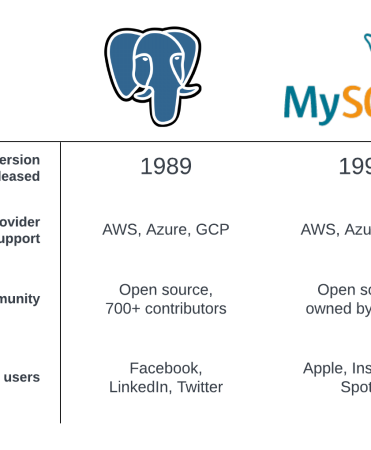
Both databases have strong community support. MySQL, being older, has a larger user base and numerous resources available. PostgreSQL, however, has gained significant traction and boasts a dedicated community that provides extensive documentation and support.
Cost and Licensing
Both PostgreSQL and MySQL are open-source, but their licensing differs. PostgreSQL is released under the PostgreSQL License, while MySQL uses the GNU General Public License (GPL). This distinction can impact how you deploy and use these databases in commercial applications.
Ease of Use
For beginners, MySQL might be easier to grasp due to its straightforward setup and management. PostgreSQL, while slightly more complex, offers more powerful features that can be advantageous in the long run.
Benefits and Side Effects
Choosing between PostgreSQL and MySQL involves weighing benefits against potential drawbacks. PostgreSQL is excellent for complex queries and large datasets, but its advanced features may require a steeper learning curve. MySQL, while easier to use, might not meet the needs of applications requiring extensive data integrity and complex operations.
Author Preference
As a developer, my preference leans towards PostgreSQL for its robustness and advanced features, particularly in cloud environments. However, MySQL’s speed and ease of use make it a solid choice for simpler applications.
Conclusion
In the battle of PostgreSQL vs MySQL for cloud-based databases, the choice ultimately depends on your specific requirements. If you need a database that handles complex queries and offers strong data integrity, PostgreSQL is the way to go. Conversely, for speed and simplicity, MySQL remains a strong contender. By understanding the strengths and weaknesses of each, you can make a well-informed decision that suits your project’s needs.
For further reading on database comparisons, check out PostgreSQL vs MongoDB: Unraveling JSON Query Performance.