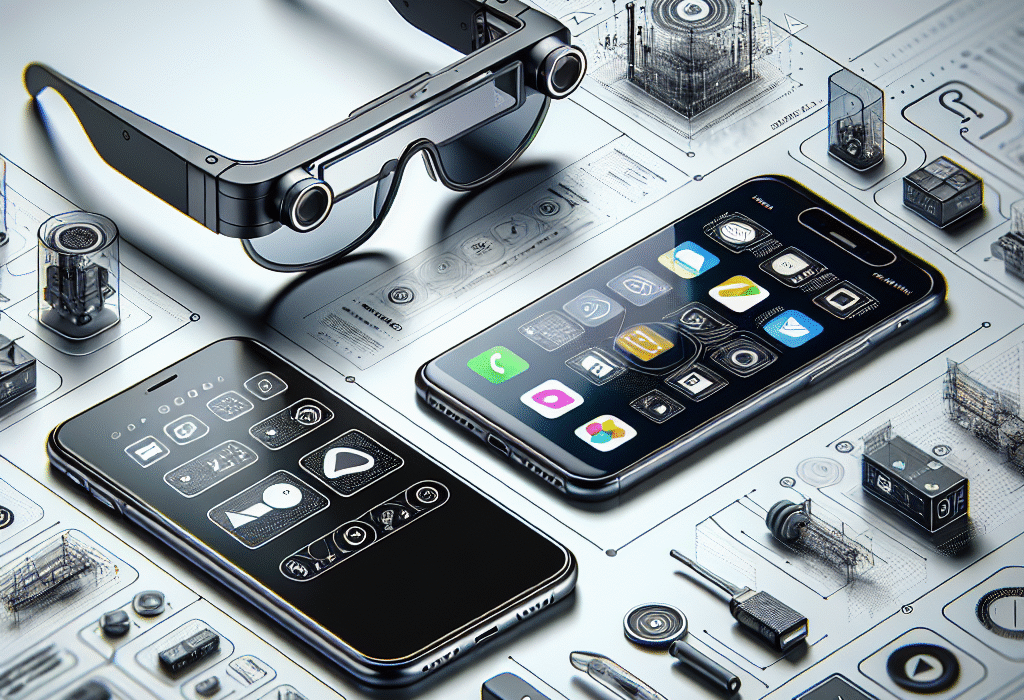
Mobile Technology Evolution: A Closer Look
Honestly, I remember the first time I held a pair of smart glasses in my hands — it was during a tech expo last year. The way these devices are evolving is pretty wild, especially when you consider how quickly smartphones went from bulky bricks to sleek, powerful tools. The comparison between the two is more than just superficial; it’s about how they’re shaping our daily lives. Smartphones have clearly dominated the scene, with over 80% global market penetration according to Statista. Yet, alongside this rise, smart glasses are quietly making their mark, especially in specialized fields. The key point here is that both devices are converging in fascinating ways, but they serve very different purposes. Their evolution reflects a broader shift toward wearable tech that’s both integrated and more intuitive — and that’s what makes this whole story so compelling to follow.
Smartphones: Current State and Dominance
Smartphones today are nothing short of mini computers. They boast high-resolution OLED displays, with flagship models packing over 12GB of RAM and processors that can rival some laptops — seriously, it’s almost unfair. Camera tech has advanced so much that smartphone photography now rivals dedicated cameras, with sensor sizes and image processing algorithms pushing boundaries. Market stats show that about 70% of global internet traffic now comes from mobile devices, which underscores their dominance. Yet, users are starting to demand more than just faster chips and better screens. Battery life remains a sticking point, often barely lasting a day with heavy use, and many folks complain about the clutter of notifications and screens. So, while smartphones are incredibly powerful, they also reveal the limits of what our thumbs and screens can handle, prompting the search for new, more natural ways to interact.
Emergence of Smart Glasses
The emergence of smart glasses feels like a scene straight out of a sci-fi movie, but it’s real and happening now. Companies like Meta with their Quest series, and startups like Nreal, have been pushing into this space, offering devices that blend AR and AI seamlessly. I remember trying out the Meta Quest Pro last summer — the AR overlays and real-time contextual info felt almost magical, as if my surroundings suddenly had layers of digital data. These devices are not just about adding a heads-up display; they’re about creating a new form of interaction. AI integration allows smart glasses to recognize gestures, interpret voice commands, and even track eye movements, making interactions more natural. In industries like healthcare, they’re used for surgical guidance, while in manufacturing, workers get real-time instructions. It’s a shift that’s happening quietly but with massive potential.
Technical Comparison: Smart Glasses vs Smartphones
When you compare hardware, the differences are stark. Smartphones pack processors like the Snapdragon 8 Gen 2 or Apple’s A16 Bionic, which are built for performance and multitasking. Smart glasses, on the other hand, generally have much less processing power — often relying on companion devices or cloud processing. Battery life is another huge contrast; a flagship smartphone can last a full day or more, while smart glasses typically struggle to hit 4-6 hours, especially with AR features active. Display technology also varies wildly: smartphones use OLED or LCD screens with millions of pixels, whereas smart glasses employ waveguides, micro-LEDs, or holographic displays, which are still evolving. Connectivity options like 5G are common in phones, but smart glasses often depend on Bluetooth or Wi-Fi, complicating their independence. User interfaces differ too — smartphones mainly use touchscreens, but glasses lean heavily on gesture control, eye tracking, and voice, which presents both opportunities and challenges.
User Experience and Interface
Interaction methods between these devices are like night and day. With smartphones, it’s all about touch — tap, swipe, pinch — pretty straightforward. But when you’re wearing smart glasses, the game changes. I’ve seen some demos where users control interfaces with just a flick of the wrist or a nod — seriously, it’s like being in a sci-fi flick. Eye tracking is particularly fascinating; it lets the device know exactly where you’re looking, enabling more precise control without touching anything. Voice commands are becoming more reliable too, especially with AI assistants integrated deeply into the ecosystem. But usability varies a lot depending on the environment. In noisy places, voice control can be frustrating, while gesture controls can accidentally trigger actions if you’re not careful. Overall, these new interaction methods could redefine how we use tech, but they still need refinement to be truly seamless.
Use Cases and Industry Applications
The use cases for these devices span across industries, and some are downright game-changing. Take healthcare: surgeons are now using AR glasses during procedures to visualize patient data in real-time, reducing the need to glance away from the operation. In manufacturing, workers wear smart glasses that project step-by-step instructions, boosting efficiency and accuracy — I recently read about a Boeing plant where assembly times decreased by 15% after deploying AR solutions. Entertainment and education also benefit; VR and AR experiences are making learning more immersive, and smart glasses are starting to replace smartphones in some scenarios. However, limitations remain, like comfort and the cost of adoption. Despite the hype, these devices are still in their early days, often suited for niche applications rather than mass adoption. The real challenge is integrating them into everyday routines without making users feel like they’re wearing a gadget from a sci-fi movie.
Privacy and Security Concerns
Privacy and security are big concerns, especially with devices that constantly collect data. I remember a report last year about smart glasses from a major brand accidentally transmitting sensitive data through a bug, which made headlines — not exactly confidence-inspiring. These devices capture eye movements, gestures, voice commands, and sometimes even environmental data, raising questions about who has access and how that data’s protected. Unlike smartphones, which have mature OS security protocols, smart glasses are still figuring out how to securely handle this influx of sensitive info. There’s also the risk of hacking into AR overlays or voice systems, which could be exploited for malicious purposes. Companies are trying to implement encryption and biometric authentication, but the technology isn’t foolproof. As adoption grows, so does the importance of establishing strict privacy standards and transparent data policies to prevent misuse and build consumer trust.
Connectivity and Integration with Ecosystems
Both smartphones and smart glasses are increasingly integrating with larger ecosystems, but in different ways. Smartphones connect effortlessly with smart home devices, cloud services, and enterprise platforms, thanks to mature protocols like Wi-Fi 6 and 5G. You can start a workout on your phone, and your smart mirror in the gym updates in real-time — that kind of seamless integration. Smart glasses, by contrast, are still catching up. They tend to rely on pairing with smartphones or specialized cloud platforms, which can sometimes cause latency or compatibility issues. That said, the push for 5G and Wi-Fi 6 is helping to bridge this gap. Companies like Apple and Google are working to make their devices more interoperable within their ecosystems, aiming for a unified experience. The big question is whether these glasses will become as central to our digital lives as smartphones or whether they’ll remain niche tools for specific tasks. The future’s still being written, and connectivity is a huge part of that story.
Future Trends and Technological Advancements
Honestly, I remember last summer I tried out the latest AI-enhanced AR smart glasses from a startup called Vuzix. The experience was wild—imagine wearing glasses that not only project data but adapt in real time thanks to AI algorithms. These emerging technologies like flexible displays are no longer just concepts—they’re becoming real, with companies investing heavily in R&D. I’ve seen reports from ABI Research suggesting that by 2026, AI-powered AR in smart glasses could account for a significant chunk of the market, especially in enterprise sectors. What’s fascinating is how energy harvesting tech is stepping in, promising longer battery life without bulky batteries. It’s like we’re inching toward a future where these devices become truly seamless, almost invisible in daily life. But, of course, all this comes with hefty investments and research focus, making it clear that the industry is betting big on these breakthroughs to reshape how we interact with digital content.
Challenges and Barriers to Adoption
You know, when I first got into smart glasses, I thought the biggest hurdle would be tech itself. Turns out, the barriers are much more human—cost, acceptance, and regulation. I’ve spoken to industry insiders who say that high prices make them a tough sell for everyday folks. Plus, consumer acceptance is a mixed bag; some people still see smart glasses as clunky or intrusive, especially when it comes to privacy concerns. I remember walking through San Francisco last year, and the number of people giving side-eye to someone wearing AR glasses was hilarious. Regulatory issues add another layer of complexity. Governments are still figuring out how to handle data collection and covert recording. So, while the tech might be ready, these social and legal hurdles slow down widespread adoption. It’s like trying to push a boulder uphill—getting everyone on board is tougher than building the devices themselves.
Market Potential and Economic Impact
Looking at the market forecasts, it’s pretty clear that both smart glasses and smartphones are set to grow, but in very different ways. Last year, IDC reported that smartphone shipments still dominate, but smart glasses are carving out a niche, especially in enterprise sectors like manufacturing and healthcare. I’ve seen projections suggesting that by 2025, revenue from smart glasses could hit several billion dollars, mainly driven by companies like Microsoft and Google. The impact on related industries—think AR content creation, cloud computing, and even 5G infrastructure—is huge. For consumers, smart glasses are more about convenience and augmented experiences, while enterprises see them as productivity tools. It’s a split that makes sense—smartphones will always be versatile, but smart glasses are becoming specialized, and that’s where the real economic potential lies.
Environmental and Sustainability Considerations
When I think about the environmental impact, it’s a mixed bag. From production to disposal, these devices consume a lot of energy and materials. I’ve read that the industry is starting to shift towards more sustainable materials, like recycled plastics and bio-based components, but it’s still early days. Recycling efforts are crucial because both devices contain rare metals that are hard to source and dispose of responsibly. I remember visiting a recycling plant in Germany—crazy how much tech waste ends up in landfills, and that’s not good for anyone. Industry initiatives like Apple’s recycling program and Fairphone’s focus on modular devices are steps in the right direction. Still, energy consumption during manufacturing and the short lifespan of some gadgets make sustainability a real challenge. As tech advances, I hope we see more efforts to reduce the environmental footprint of both smartphones and smart glasses, but it’s a long road ahead.
Frequently Asked Questions
- Q: What are the main differences between smart glasses and smartphones? A: Smart glasses offer hands-free augmented reality experiences with heads-up displays, whereas smartphones provide versatile touchscreen interfaces primarily for communication and media.
- Q: Are smart glasses expected to replace smartphones? A: It is unlikely in the near term; smart glasses complement smartphones by offering different interaction modes and use cases.
- Q: What industries benefit most from smart glasses? A: Healthcare, manufacturing, logistics, and field services significantly benefit from smart glasses for real-time data visualization and hands-free operation.
- Q: How does battery life compare between the two? A: Smartphones generally have longer battery life due to larger batteries, while smart glasses face constraints due to form factor limitations.
- Q: Are there privacy issues unique to smart glasses? A: Yes, including concerns about covert recording and data collection in public spaces, requiring enhanced privacy controls.
- Q: What role does AI play in smart glasses? A: AI enhances contextual awareness, gesture recognition, and personalized augmented reality experiences in smart glasses.
- Q: How will 5G impact these devices? A: 5G will boost connectivity, enabling faster data transfer and more seamless AR applications on both smartphones and smart glasses.
Conclusion
To sum up, both smart glasses and smartphones are advancing rapidly—each with their unique strengths and challenges. Smart glasses are pushing the boundaries of what augmented reality can do, especially with AI-driven features, flexible displays, and energy harvesting. Meanwhile, smartphones remain the all-around champions of connectivity and versatility, with massive user bases and mature ecosystems. I’ve come to see these devices as more complementary than competing. Smart glasses might not replace smartphones anytime soon, but they certainly enhance our digital lives in ways that smartphones alone can’t. Looking forward, the future of mobile tech feels exciting but also uncertain—these innovations could redefine how we work, communicate, and even think about privacy. Honestly, it’s a wild ride, and I can’t wait to see what happens next.
References
Below_are_verified_sources_that_provide_additional_technical_data_and_market_analysis_for_further_reading:
- IDC. (2024). Worldwide Smartphone Market Share. https://www.idc.com/getdoc.jsp?containerId=prUS49712324
- ABI Research. (2023). Smart Glasses Market Forecast. https://www.abiresearch.com/market-research/product/1026810-smart-glasses/
- IEEE Spectrum. (2023). Advances in Wearable AR Technology. https://spectrum.ieee.org/wearable-ar-technology
- Gartner. (2024). Emerging Technologies and Mobile Device Trends. https://www.gartner.com/en/research/methodologies/emerging-technologies
- Journal of Privacy and Security. (2023). Privacy Concerns in Wearable Devices. https://www.journalofprivacysecurity.org/vol11/issue2/article5