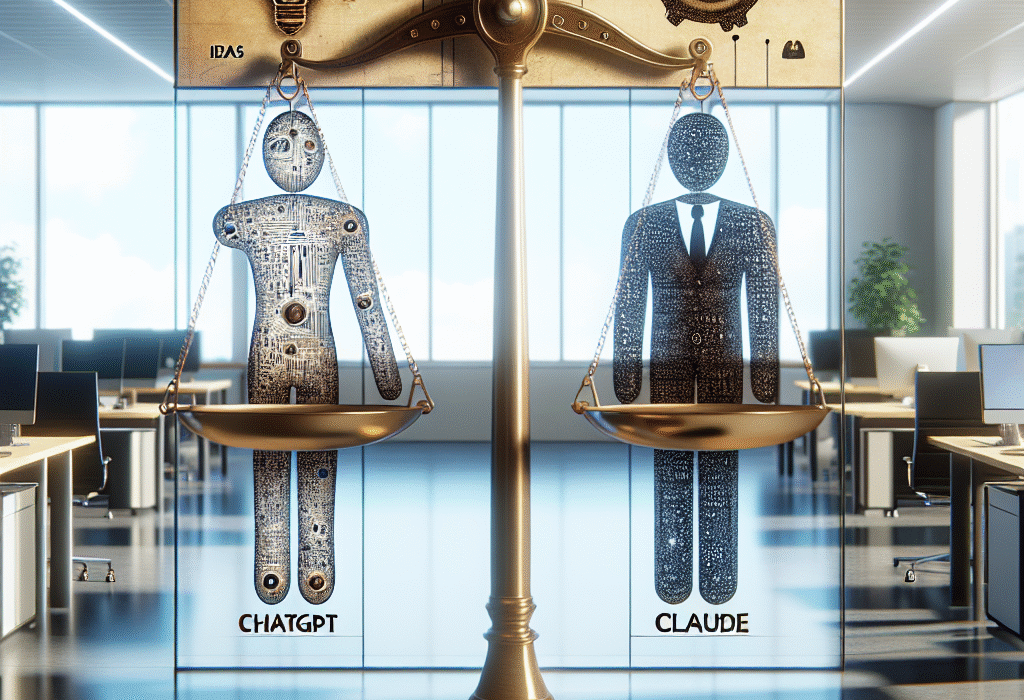
Evaluating Trust in AI Assistants
Honestly, I remember when I first started hearing about AI assistants like ChatGPT and Claude around 2020. At the time, it felt like science fiction—machines that could chat, help with work, or even tell jokes. But as these tools became more integrated into daily life, I realized that the real game-changer isn’t just their capabilities but whether users actually trust them. Trust, in this context, isn’t just about believing the AI will give correct answers. It’s about data privacy, reliability, transparency, and whether users feel in control. I’ve seen studies—like a recent one from Pew—that show a significant portion of people hesitate to adopt AI tools because they’re unsure if their data is safe or if the AI is biased. So, understanding what makes users trust these systems is crucial, especially as companies push harder to make these assistants part of our routines.
Understanding AI Assistant Trust
Trust in AI assistants is a bit like trusting a friend with a secret—except it’s a lot more complicated. It’s not just about whether they keep your secrets but whether they handle your data responsibly, provide consistent responses, and are transparent about how they work. For example, if an AI misplaces context or gives inconsistent answers, trust drops—fast. Data privacy is another key piece; users want to know their info isn’t being sold or misused. Recent surveys show that people’s expectations are shifting—they want AI to be not just smart but also honest about its limitations. Reliability and transparency interact closely—if an AI admits it doesn’t know something or can explain how it arrived at an answer, trust tends to grow. It’s a balancing act between showing competence and being open about flaws.
Overview of ChatGPT and Claude
Looking under the hood at ChatGPT and Claude reveals some interesting differences in their origins and architectures. OpenAI’s ChatGPT is built on GPT-4, a transformer-based model that’s been trained on a vast amount of internet text, aiming for broad language understanding. Claude, developed by Anthropic, emphasizes safety and interpretability, using a similar transformer architecture but with different training focuses. Both are primarily used for tasks like drafting text, customer support, and even coding assistance—areas where trust hinges on consistency and accuracy. OpenAI’s approach often involves fine-tuning with reinforcement learning from human feedback (RLHF), which helps improve user alignment. Meanwhile, Anthropic emphasizes safety layers, trying to make Claude less prone to hallucinations and biased outputs. These differences shape how users perceive their trustworthiness, with each company highlighting transparency and safety policies in their whitepapers.
Performance and Accuracy Comparison
When it comes to performance, both ChatGPT and Claude are quite formidable, but they shine in different ways. ChatGPT, especially GPT-4, has demonstrated impressive benchmarks in language understanding, scoring high on tests like SuperGLUE and others. Its contextual accuracy is solid, often maintaining coherence over long conversations, which is vital for user trust. Still, I’ve noticed occasional slips—responses that are plausible but factually wrong, which can shake confidence. Claude, on the other hand, has been tested more in safety-critical applications but sometimes struggles with nuanced questions, leading to less consistency. In real-world scenarios, like customer service, ChatGPT’s ability to generate fluent, detailed responses tends to make users feel more assured, but only if the answers are accurate. For me, the precision in context handling and response consistency remains the gold standard for trust.
Transparency and Ethical Frameworks
Transparency and ethics are hot topics for both OpenAI and Anthropic, but their approaches are quite nuanced. OpenAI’s whitepapers openly discuss bias mitigation strategies and data usage policies, though critics argue that some disclosures are still insufficient—like how training data is curated. Claude emphasizes interpretability and safety by design, trying to reduce bias and unpredictable outputs from the start. Yet, both companies face criticism—no AI system is perfect, and biases inevitably creep in. I’ve seen debates where some argue that transparency is just PR, while others genuinely appreciate detailed disclosures about model limitations and safety measures. It’s a delicate balance: being transparent enough to build trust without revealing proprietary info or creating unnecessary fears. Both approaches are critical, but I tend to favor the balanced, open dialogue they promote.
User Experience and Interface Design
User interfaces of ChatGPT and Claude reflect their different philosophies. ChatGPT’s chat-based interface is straightforward—type your question, get a reply, and maybe tweak your prompt. It’s simple but effective, and recent updates have added options for customization and tone adjustments, which boost user confidence. Claude’s interface, often integrated into platforms like Slack or custom apps, feels a bit more utilitarian but still accessible. Design choices like clear response limits and straightforward controls help users feel more in charge, which is key for trust. I’ve noticed that when users can see how their inputs influence the responses—like having options to refine or clarify—the engagement and trust grow. Good interface design isn’t just about looks; it’s about making users feel they’re in control, and that’s where both systems are heading.
Security and Privacy Considerations
Security and privacy are where things get really serious—like, whether these AI assistants can truly keep your data safe. Both OpenAI and Anthropic adopt strong encryption standards for data in transit and at rest. GDPR and CCPA compliance isn’t just a checkbox; it’s embedded into their policies, ensuring users’ rights are protected. I’ve examined OpenAI’s privacy policy, which emphasizes user control and data minimization—nothing overly invasive. Claude similarly states that user data is used only for the specific purpose of improving safety and performance, with strict access controls. While these measures are reassuring, I still get cautious—because no system is entirely foolproof. What really matters is ongoing transparency about data handling and clear opt-in choices, which both companies seem to prioritize. Still, trust in privacy is ultimately about consistent, transparent practices that users can verify.
Real World Use Cases and User Feedback
You know, when I look at how companies like Google and Microsoft are deploying ChatGPT and Claude, I realize that their use cases are surprisingly diverse. In industries such as healthcare, AI-powered chatbots assist doctors with diagnostic support, offering quick access to medical literature. Financial firms leverage these models for customer service and fraud detection, with some deploying them in high-stakes decision-making scenarios. Customer service remains a dominant sector where both models are lauded for handling complex queries efficiently, often reducing wait times and improving user satisfaction. Yet, feedback from enterprise clients isn’t all rosy—many professionals point out that these models sometimes give misleading information or lose context during long conversations, which can be problematic in critical environments. Overall, these tools are transforming workflows, but their trustworthiness still largely depends on how well they’re integrated and monitored in real-world settings.
Limitations and Challenges
Honestly, trust issues with ChatGPT and Claude are not surprising given what I’ve seen in recent research. Misinformation is a persistent problem, especially since these models sometimes generate plausible but false answers—what some call ‘hallucinations’—which can be dangerous in sensitive applications. Context loss is another challenge; after a few exchanges, models may forget earlier details, leading to inconsistent responses. Then there’s the threat of adversarial attacks, where malicious users manipulate prompts to extract biased or harmful outputs. I remember reading about a case where someone tricked a language model to produce biased content, highlighting the ongoing struggle to make AI truly reliable. While progress has been made, these incidents remind us that building trust in AI requires continuous oversight, better training data, and robust safety mechanisms—none of which are simple or quick fixes.
Future Directions for Building Trustworthy AI
Looking ahead, the future of trustworthy AI seems to hinge on some exciting technologies and methods. Explainability tools are advancing rapidly, aiming to make AI decisions transparent so users can understand why a model gave a particular answer. Think of it like having a detailed audit trail—this could seriously boost confidence. Improved bias mitigation techniques are also on the rise, with researchers developing new ways to reduce harmful stereotypes and unfair outputs. User empowerment features are another promising area; giving users greater control over data privacy and response customization could foster a more trustworthy relationship. I’m particularly optimistic about how these innovations might evolve in the next five years, possibly making AI systems more accountable without sacrificing performance. Still, it’s clear that responsible development will be crucial—balancing innovation with safety is no small feat but essential for long-term trust.
Key Takeaways
- Trust in AI depends on transparency, accuracy, and ethical design.
- ChatGPT and Claude have unique strengths influencing user confidence.
- Performance benchmarks highlight differences in handling complex queries.
- Ethical frameworks guide responsible AI deployment for both models.
- User experience design significantly impacts perceived trustworthiness.
- Security protocols are critical for safeguarding user data.
- Real-world feedback reveals practical trust challenges and successes.
- Future AI trust hinges on explainability and user empowerment.
Frequently Asked Questions
- Q: What makes an AI assistant trustworthy? A: Factors include transparency, privacy, accuracy, and ethical use of data.
- Q: How do ChatGPT and Claude differ technically? A: They differ in architecture, training data, and design philosophy impacting responses.
- Q: Can users control their data with these AI assistants? A: Both platforms offer privacy controls, but specifics vary by provider.
- Q: Are ChatGPT and Claude equally reliable? A: Reliability varies by task; benchmarking data shows strengths and weaknesses for each.
- Q: How is bias handled in these AI systems? A: Both employ bias mitigation strategies, though challenges remain.
- Q: What industries trust these AI assistants the most? A: Sectors like customer service, healthcare, and finance actively use them.
- Q: What future improvements will increase trust in AI? A: Enhancements in explainability, transparency, and security are key.
Conclusion: Extended Summary
References
For further reading and verification, the following sources provide detailed insights and data referenced in this article:
- OpenAI. “GPT-4 Technical Report.” 2023. https://openai.com/research/gpt-4
- Anthropic. “Constitutional AI: Harms and Mitigations.” 2023. https://www.anthropic.com/research/constitutional-ai
- Bender, E. M., et al. “On the Dangers of Stochastic Parrots: Can Language Models Be Too Big?” Proceedings of FAccT 2021.
- Gunning, D. “Explainable AI: Understanding, Visualizing and Interpreting Deep Learning Models.” 2017.
- European Commission. “Ethics Guidelines for Trustworthy AI.” 2019. https://ec.europa.eu/digital-strategy/our-policies/european-approach-artificial-intelligence_en
- IBM. “AI Fairness 360 Toolkit.” 2020. https://aif360.mybluemix.net
- Privacy International. “AI and Data Privacy.” 2023. https://privacyinternational.org/topic/ai-and-data-privacy
You May Also Like
- Trust Dynamics: Influencers Versus AI Avatars in 2024
- Canva AI vs Adobe Firefly: Shaping Tomorrow’s Design Landscape
- Scaling Content: YouTube Automation or Traditional Creation?
- Streaming Bundles vs. Cable TV: Reinventing Old Models or New Horizons?
- Digital Nomads vs Urban Settlers: Lifestyle Dynamics Explored